
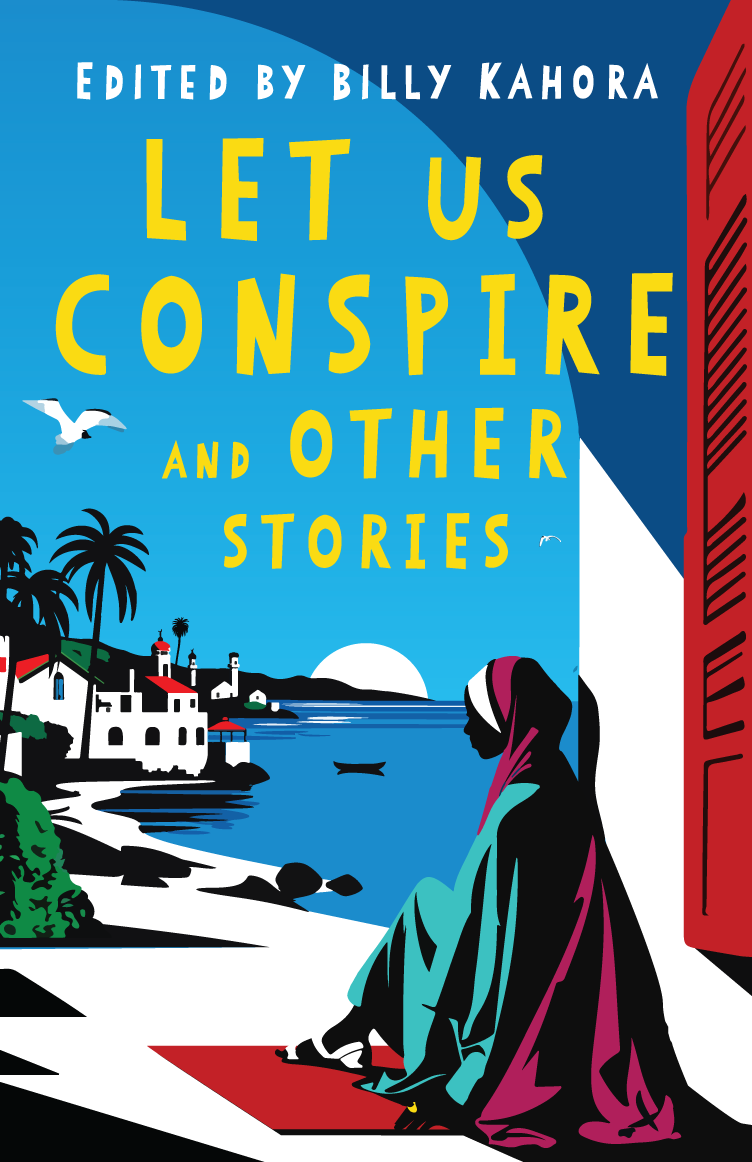
Let Us Conspire and Other Stories
Edited by Billy Kahora
The broad nature of style and subject of the stories in this anthology are best understood within the context of the fascinating history of the short story and how it has been collected in Kenya. It not only features stories that are traditionally realist, but also hyper-realist and the radically experimental. As such, it offers a snapshot of the Kenyan short story’s evolution.
The immediate precursor to any form of collection of Kenyan short stories was the 1965 anthology Origin East Africa, which featured writers from all three of the region’s nations with links to University College, Makerere. Shortly after this, the first Kenyan literary magazine, Nexus/Busara, was launched; tellingly, this emerged from the University College, Nairobi and set to overhaul Makerere as the intellectual capital of East Africa.
Nexus/Busara, a literary magazine/journal of short fiction, poetry and criticism, reflected the Kenyan immediate post-independence moment in theme and style. It signified a shift from the Kenyan stories that had appeared in Origin East Africa by Kenyan writers such as Ngũgĩ Wa Thiongo, which had taken on village life in colonial times. Written from what critics such as Simon Gikandi and Jacqueline Bardolph described as the ‘cloistered’ environment of Makerere, the Origin East Africa stories can be seen as far removed from what was happening in the East African countries just before Independence. The stories in Nexus/Busara marked a much stronger engagement with the heady politics of the late 60s and the early 70s. There would also be one-off anthologies during the early to mid-1970s including Faces at Crossroads edited by Chris Wanjala and other successive literary magazines/journals such as Ghala and Zuka. These spaces would eventually recede as a result of the ongoing crackdown on university and other creative spaces by the Kenyatta and Moi regimes.
The influence of these stories and their representation of Kenya in the immediate decades after independence and their traditional realist mode can be seen in this anthology through work by Daniella Malinda, Florence Mwikya, Mumbi Macharia and Ndungu Njeru. But there is also the influence of modernist angst from the fiction of Leonard Kibera, Meja Mwangi and David Maillu in the stories by Noella Moshi, Gladwell Pamba, Dennis Mugaa and Imou.
By the late 80s, Kenyan literary magazines/journals/anthologies were far and in-between. It is, however, worth mentioning Our Secret Lives edited by Wanjiru Kabira, Muthoni Karega and Elizabeth Nzioki. It was only with the millennium and the emergence of Kwani? that the collection of short stories in any form, anthology, collection, literary magazine or journal was revived. The later years of Kwani?, post 2020, would bring about the emergence of contemporary online and print spaces such as Jalada, Enkare Review, Lolwe and DRR. Alongside this, writers including Makena Onjerika and Zukiswa Wanner have also been building new Kenya-based writing spaces that have produced anthologies. This includes a new collection of stories titled Bald Dandelions With Their Wishes Blown Clean Off edited by Saseni! and Huza Press that features Kenyan, Rwandese, Somaliland and Somali writers.
This new generation of writing has brought a shift in subject but more overtly a shift in style. While a lot of the Kwani? writing was primarily realist, the work in Jalada, and the numerous themed online journals they produced, rejected this for a more radical experimentation across both subject and form. That influence can be seen in ‘Hindure or I Remember Herereza’ by Vera (just one name, yes), which not only illustrates the potential of African horror-fantasy through the use of folklore, but also the integration of different genres – in this case the use of the journey motif. ‘Hindure’ is an incredible road movie told on the page featuring a compelling she-beast in a strange and wonderfully liminal world between reality and African myth. In Pamba’s ‘The Last Shop’, a young man finds hope but loses his innocence when the strange woman who is his life mentor finally succumbs to the humiliations of the small town that is in perpetual judgment of her life choices – the story not only does a great job of combining traditional realism and modernist angst but opens up a new Kenyan peri-urban space to short fiction.
Ndegwa Nguru’s ‘How Many Minutes Till I’m Live Again’ is a multi-vocal short story about a queer character’s playing around with the thought of leaving Kenya to find love to take on increasingly relevant themes of international mobility and joining current fictional trends that are challenging The traditional heteronormative nature of Kenyan fiction. Autofiction also finds its place in Noella Moshi’s story ‘When They Let Me Speak, I Said Nothing’ in which a father and daughter relationship is explored.
All the above stories emerged from workshops held over three weeks in May 2022 by Jahazi Press in collaboration with creative writing teaching platform Saseni!. The rest of the pieces from the workshop explore older themes in the new ways already described. Guest writers leading sessions included Yvonne Owuor, Peter Kimani, Mikhail Iossel and Professor Mohamed Bakari. Special thanks to Karen Wandia for the great administrative work she did on the workshop. We also solicited stories from some of the most talented writers working in Kenya today. Caine Prize-winner Idza Luhumyo’s story celebrates Bi Kizee’s life and her impact on young girls in a coastal community in the title story, ‘Let Us Conspire’. Kiprop Kimutai’s ‘The Taste of Honey’ is a paean on the death of a mother and how it affects her children. Dennis Múgaa captures Nairobian urban nostalgia in the main character’s memory of a B-ball childhood pal who betrayed him through his piece, ‘Spalding’. Stacy Hardy of Chimurenga/Wits University and Otieno Owino did a great job with structural edits and then copy-edits and proofing respectively. There has been talk of a generational pause in literary terms after the departure of Kwani? but this anthology suggests Kenyan literature is in rude health.
As I write this, political protests have recently rocked Kenya to its foundations driven by a younger generation. The stories in this anthology might not have prophesied these events just as those in Origin East Africa could not have foretold of the decades of upheaval that would follow independence in the East Africa region. But still, they offer a literary context for these times of youth dissatisfaction in Kenya. Just as their literary precursors have always done.
Billy Kahora
July 2024